Die Brücke: The Birth of Modern Art in Germany (1972)
Released 1972-01-01 · Documentary · 24 minutes
Synopsis
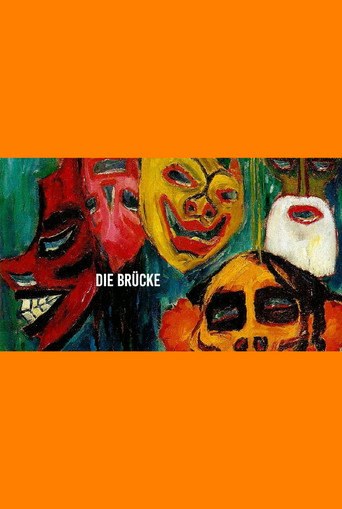
This movement marks the beginning of modern art in Germany. It is the German equivalent of French Fauvism, from which it draws its main inspiration, but it carries an Expressionist and social emphasis that is characteristic of Nordic 'angst.' The artists of Die Brucke were restless creatures, over-sensitive, haunted by religious, sexual, political or moral obsessions. Dramatic landscapes and nudes, mystical and visionary compositions, scenes of the countryside, the streets, the circus, the cafe-dansants and the demi-monde were their principal subjects. Their pure colours blaze in acid stridency, encompassed by rough, dry contours which show the influence of African art and primitive woodcuts. The work of the following is shown: Kirchner, Fritz Bleyl, Erich Heckel, Schmidt-Rottluff, Otto Muller, Emil Nolde and Max Pechstein.
Related titles
- Secret impressionists
- Crumb
- Franz Kline - Remembered
- Beautiful Thing: A Passion for Porcelain
- Toulouse-Lautrec: The Full Story
- The Painter Sam Francis
- Bronwyn Oliver: The Shadows Within
- Philip Trusttum: I Know I'm Going to Paint
- A Revolution on Canvas
- Centre Pompidou: Ceci n'est pas un musée
- Peggy Guggenheim: Art Addict
- Alberto Giacometti - Die Augen am Horizont